Program Schedule
Detailed agenda for the 3rd International Reinforcement Learning Bootcamp

Detailed agenda for the 3rd International Reinforcement Learning Bootcamp
A comprehensive look at our three-day event
Note: This program is tentative and subject to change as we finalize details.
Our program is designed to provide a comprehensive introduction to reinforcement learning, from basic concepts to advanced applications. The bootcamp spans three full days, with a mix of theoretical lectures, hands-on workshops, and networking opportunities.
Detailed agenda for September 16–18, 2026
Good to know: Participation in the bootcamp is free of charge. However, please note that travel, accommodation, lunches, and evening social events are at the participants' own expense.
Advance reservations are required for the social events. We will send out a separate email with detailed instructions on how to secure your spot.
| 11:00 – 12:00 | Arrival & Registration & Coffee |
| 12:00 – 13:00 | Opening Lunch (ARGE Beisl, Ulrike-Gschwandtner-Straße 5) (self-paid) |
| 13:00 – 13:15 | Opening and Introduction |
| 13:15 – 14:00 | Beginner Lecture: Introduction to Reinforcement Learning (No Math, No Panic) - Olga Mironova |
| 14:00 – 15:00 | Beginner Lecture: Reinforcement Learning Fundamentals - Simon Hirlaender |
| 15:00 – 15:30 | Coffee Break |
| 15:30 – 17:30 | Beginner Tutorial Hands-On Session: Tabular RL & Discrete MDPs |
| 17:30 – 18:15 | Keynote Keynote: Designing for Intelligence: Particle Accelerators in the AI Era - Dr. Verena Kain (CERN, remote) |
| 19:00 – 21:00 | Welcome Dinner (ARGE Beisl) (self-paid) |
| 9:00 – 9:45 | Intermediate Lecture: Policy Gradients and Actor Critics - Thomas Gallien (JOANNEUM RESEARCH / AI Austria) |
| 9:45 – 10:30 | Keynote Keynote: What Should Models Model in Model-Based RL? - Prof. Michael Bowling (University of Alberta / Amii) |
| 10:30 – 11:00 | Coffee Break |
| 11:00 – 11:45 | Keynote Keynote: The benefits of satisficing in reinforcement learning - Prof. Ronald Ortner (University of Leoben) |
| 11:45 – 12:30 | Keynote Keynote: Learning Humanoid Robot Policies for Industrial Tasks - Prof. Elmar Rueckert (University of Leoben) |
| 12:30 – 12:45 | Group Photo |
| 12:45 – 14:00 | Lunch (ARGE Beisl) (self-paid) |
| 14:00 – 15:30 |
Intermediate
Tutorial Hands-On Session 2: Air Traffic Control as an MDP
|
| 15:30 – 16:00 | Coffee Break |
| 16:00 – 18:00 |
Advanced
Tutorial Hands-On Session 3: The Flight Challenge: How to Compete
Air Traffic Control Tournament
|
| 19:00 – 21:00 | Social Dinner (Dai Pai, Hofstallgasse 4) (self-paid) |
| 9:00 – 10:30 | Advanced Interactive Wrap-Up Tutorial: Findings & Expert Panel |
| 10:30 – 11:00 | Coffee Break |
| 11:00 – 12:00 | Advanced Lecture: Agentic AI in the Context of Reinforcement Learning - Marius-Constantin Dinu (AI Austria) |
| 12:00 – 13:00 | Finale Tournament Final, Awards Ceremony & Closing Remarks |
| 13:00 – 14:00 | Lunch (ARGE Beisl) (self-paid) |
| 15:00 – 16:00 | Salzburg City Visit |
Meet our expert speakers and instructors
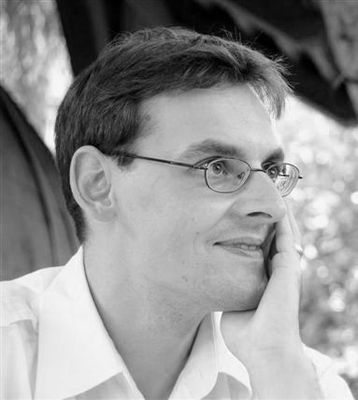
University of Leoben, Austria
Associate Professor, Department of Mathematics and Information Technology
The overall goal of standard reinforcement learning is to find an optimal policy that maximizes the total reward. In this talk, I want to discuss the alternative objective of satisficing, which is content with performance above a given threshold. It will be argued that this more modest aim is not only often more suitable in applications but also can be shown to fulfill stronger performance guarantees.
Ronald Ortner is an associate professor at the Department of Mathematics and Information Technology at the University of Leoben, Austria, where he has served since 2003 (assistant professor) and since 2010 as associate professor, interrupted by a sabbatical at Inria Lille, France in 2012. His research focuses on questions in theoretical reinforcement learning, particularly regret analysis in settings ranging from multi-armed bandits to general Markov decision processes.
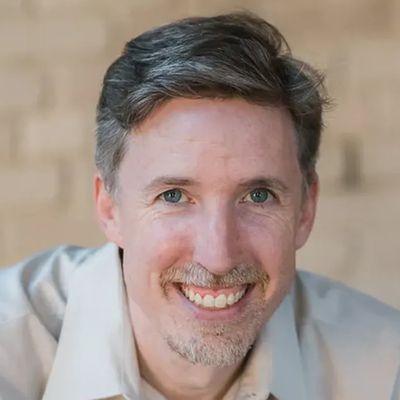
University of Alberta, Canada
Fellow & Canada CIFAR AI Chair at Amii, Full Professor, Research Scientist at Google DeepMind
Dr. Michael Bowling is a Professor at the University of Alberta, a Canada CIFAR AI Chair, Fellow in the Alberta Machine Intelligence Institute, and a AAAI Fellow. He lead the Computer Poker Research Group, which built some of the best AI poker playing programs in the world, including being the first to beat professional players at both limit and no-limit variants of the game. He was also behind the use of Atari 2600 games to evaluate the general competency of reinforcement learning algorithms, which is now a ubiquitous benchmark suite for reinforcement learning. He has published well over 150 conference and journal articles, including two articles in Science. His research has been featured on the television programs Scientific American Frontiers, National Geographic Today, and Discovery Channel Canada, as well appearing in the New York Times, Wired, on CBC and BBC radio, and twice in exhibits at the Smithsonian Museums.
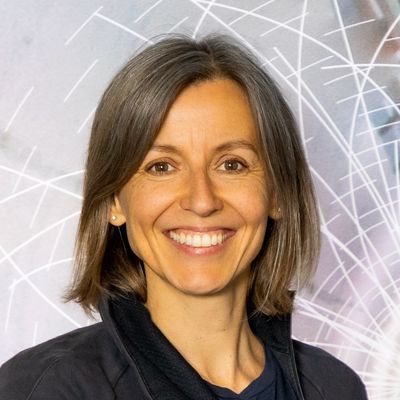
European Organization for Nuclear Research (CERN), Switzerland
Accelerator Physicist, Team Leader - Super Proton Synchrotron & Low Energy Ion Ring
Artificial intelligence is reshaping the physical sciences at a fundamental level. This talk addresses what that transformation means for particle accelerators and the path towards automated scientific discovery. It will summarise current trends in machine learning for accelerators from recent community workshops and will describe a lifecycle vision for next-generation machines — it argues that AI must be a first-class design consideration from the outset, not a post-hoc addition. Reinforcement learning will be a centre piece of what will come next — not just for autonomous accelerator operation, but also accelerator design.
Verena Kain is an accelerator physicist at CERN, supervising students and postdocs and leading the teams running the Super Proton Synchrotron and Low Energy Ion Ring. She brings extensive experience in commissioning and operating large-scale accelerator facilities, having served as one of the Engineers in Charge during the commissioning and operation of the Large Hadron Collider (LHC) from 2007 to 2013. Her responsibilities include software development for the control room - combining physics and hardware - and she is actively pushing for automation to achieve higher efficiency, reproducibility, and increased flexibility of CERN's high-energy frontier machines.
University of Leoben, Austria
Chair of the Cyber-Physical-Systems Institute, 2019 German Young Researcher Award
Humanoid robots are expected to play an increasingly important role in industrial and consumer environments. While recent advances have demonstrated promising results for pick-and-place tasks, achieving robust, data-efficient, and transferable robot skills remains a significant challenge. This talk presents learning-based approaches for humanoid robot manipulation that combine data augmentation, motion capture, and whole-body teleoperation using AR/VR systems and wearable motion trackers. The resulting policies are trained end-to-end using reinforcement learning frameworks, including diffusion policies and flow-matching approaches, targeting demanding industrial scenarios such as recycling operations, handling toxic powders, and manipulating hazardous batteries.
Elmar Rueckert is a full professor and chair of the Cyber-Physical-Systems Institute at the University of Leoben, Austria. He received his PhD in computer science from Graz University of Technology in 2014 and previously held positions as senior researcher and research group leader at TU Darmstadt and as assistant professor at the University of Lübeck. His research spans stochastic machine and deep learning, robotics, reinforcement learning, and human motor control. In 2019, he was awarded the German Young Researcher Award.
Intensive learning experiences combining theory and practice
Learn the foundational theories of Reinforcement Learning. Formulate discrete Markov Decision Processes (MDPs) and solve them using classic tabular methods in an interactive Google Colab notebook environment.
Environment: Maze (Gymnasium)
Model a real-world air traffic control scenario as a Markov Decision Process. Define states, actions, transitions, and rewards — then train an RL agent to manage flight paths safely and efficiently.
Environment: Flight4DEnv (air-traffic)
Design custom reward functions, observation spaces, and transition dynamics. Apply advanced techniques to optimize agents for air traffic control, and compete against other participants in the simulation tournament.
Environment: Flight4DEnv (air-traffic)
The intermediate and advanced sessions share one codebase, the AirTraffic package, documented in full in the AirTraffic usage guide.