AirTraffic — the Flight4DEnv environment
The environment shared by the Intermediate and Advanced sessions: n aircraft
on a collision course plus m random background flights, and a policy that
issues speed and flight-level clearances to keep the airspace clear.
This page is what the environment is. To train and evaluate an agent on it, see Training and Evaluation.
Prerequisites
A working rlbootcamp environment. All commands assume it is
active and that you are in the package directory:
What the package contains
airtraffic/
├── envs/                     # the importable Python package
│   ├── __init__.py           #   re-exports + gymnasium.register("Flight4DEnv-v0")
│   ├── flight.py             #   Flight — single-aircraft kinematics
│   ├── simulator.py          #   CollisionCourseSimulator — the physics engine
│   └── flight_4d.py          #   Flight4DEnv — the Gymnasium environment
├── agents/
│   └── rule_based_4d.py      # Priority4DController — the bar to clear
├── policies/
│   └── autoregressive.py     # the default policy: aircraft -> clearance, masked
├── scripts/
│   ├── train_4d.py           # PPO training CLI
│   ├── score_4d.py           # the board: held-out seeds, ranked
│   ├── calibrate_4d.py       # reward-term calibration
│   └── callbacks_4d.py       # curriculum + auto-entropy callbacks
└── tests/                    # the environment contract
Three layers, from the bottom up:
| Layer | Class | Role |
|---|---|---|
| Kinematics | Flight |
One aircraft: position, velocity, heading, altitude; advances one tick. |
| Physics | CollisionCourseSimulator |
Spawns n collision-course + m random aircraft; detects congestion. |
| RL interface | Flight4DEnv |
Wraps the simulator in the Gymnasium API (obs/action/reward/mask). |
See the Environment API reference for the full signatures.
The MDP in one screen
| Observation | Box(shape=(N_FEATS·n_flights + N_GLOBALS + n_actions,)) — 13 features per aircraft, two global scalars (episode clock, clearance budget remaining), and the legality mask carried inline. The per-aircraft features are pose (x, y, alt, vel, sin/cos hdg), dt_exit (projected minus target exit time), d_alt (levels off the entry altitude), the clearances that aircraft has already had, hold_left until an active temporary manoeuvre reverts, the severity and timing of its worst predicted conflict, and an active flag (details). |
| Action | Discrete(1 + 7·n_flights) — index 0 idles; index 1 + 7·i + c issues clearance c to aircraft i. At most one aircraft is commanded per step. The seven clearances are FL_DEC, FL_INC, FL_DEC2_T, FL_INC2_T, SPD_DN_T, SPD_UP_T, RESUME; every _T variant auto-reverts after hold_steps, so the 4D recovery is part of the instruction rather than a second decision. |
| Reward | Three direct per-step costs — predicted separation severity, 4D exit deviation, and a per-clearance transition cost (a property of the action rather than the state) — plus a crash charge covering the steps not flown. These are deliberately not potential-based: predicted severity is already dense, so it needs no shaping to be learnable, and the price of saying what we mean directly is that these weights can move the optimum, where potential-based shaping provably cannot (details). |
| Termination | A mid-air (two co-level aircraft within 100 m) terminates. Reaching the horizon or exhausting the clearance budget truncates — a truncated state still has a future worth bootstrapping from, a terminal one does not. |
| Masking | action_masks() is authoritative and removes kinematic dead ends, including clearances that would make the exit slot unreachable even at v_max. The same mask is in the observation from env.mask_offset, so PPO recomputes log-probabilities against the distribution it actually sampled from. |
The full reward decomposition and exact termination thresholds are in the API reference.
This is the design surface for Session #3
In the Advanced session you redesign parts of this MDP — the observation, which clearances are allowed, and the reward weighting — to climb the competition leaderboard. Start from the Advanced session.
Step it by hand
import sys; sys.path.insert(0, ".")   # so `import envs` works from sessions/03-advanced/airtraffic/
from envs import Flight4DEnv

env = Flight4DEnv()                          # n + m = 5, n ~ U(2, 4) per reset
obs, info = env.reset(seed=900_000)          # this seed draws n=3, m=2
print("observation shape:", obs.shape)       # (N_FEATS*n_flights + N_GLOBALS + n_actions,)
print("action space:", env.action_space)     # Discrete(1 + 7*n_flights) = Discrete(36)

terminated = truncated = False
total = 0.0
while not (terminated or truncated):
    obs, reward, terminated, truncated, info = env.step(0)   # 0 idles every aircraft
    total += reward
print(f"episode reward (do-nothing baseline): {total:.2f}")
Why sys.path.insert(0, ".")?
The package isn't pip install-ed; it's imported by path. From inside
sessions/03-advanced/airtraffic/, adding . puts the envs/ package on the import path.
Or via the Gymnasium registry
Importing envs registers the id Flight4DEnv-v0:
import envs                      # triggers gymnasium.register(...)
import gymnasium as gym
env = gym.make("Flight4DEnv-v0")
Watch a clearance work
Before any code, watch the problem. Every clip below is the same sector, the same seed — two aircraft converging co-level at FL374, closing to within a metre of each other at step 18 — with three background flights crossing at other levels. Only the clearances differ.
First, how to read the picture
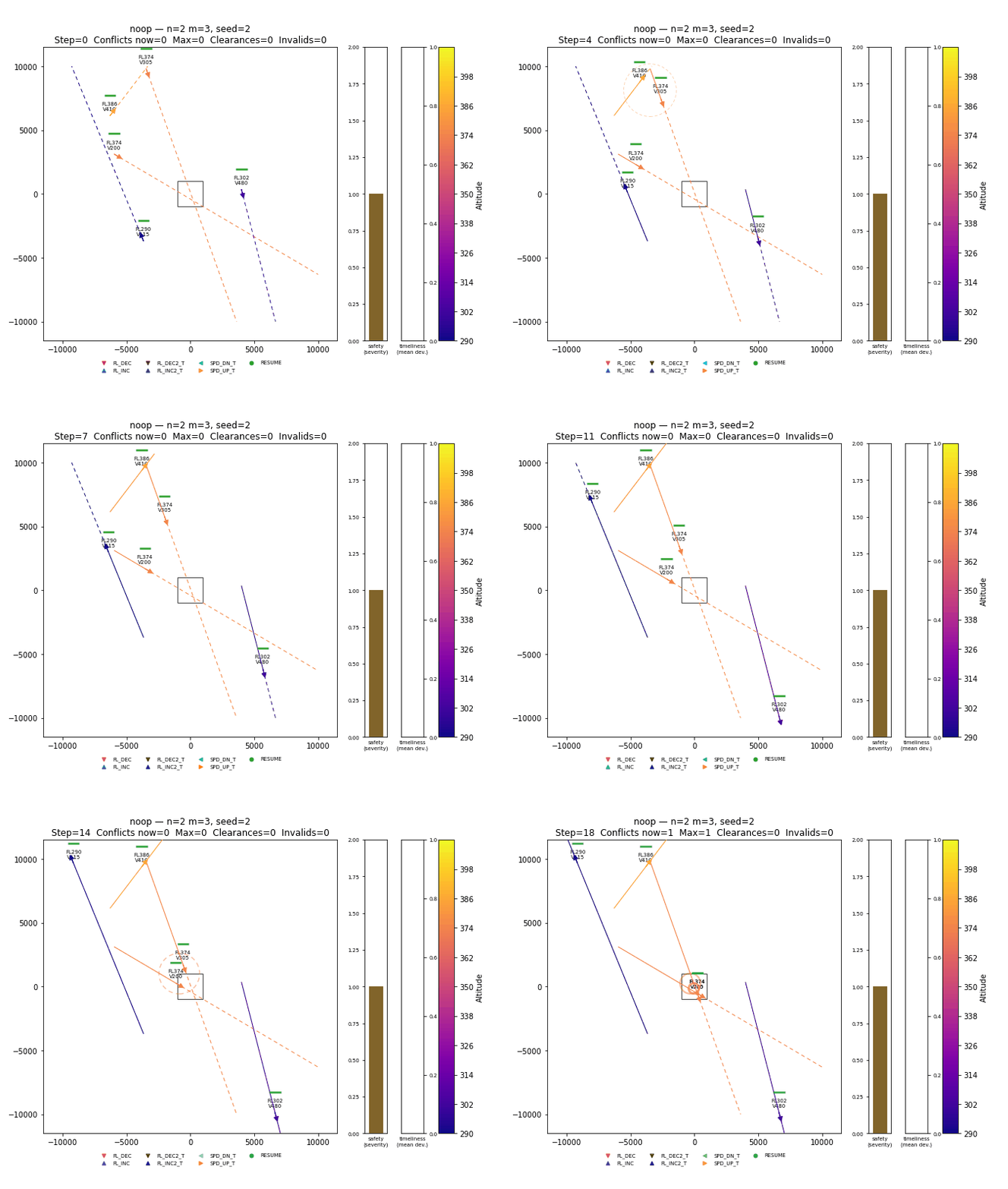
| What you see | What it means |
|---|---|
| Solid track behind each aircraft | where it has flown, coloured by the level it actually held on that stretch |
| Dashed line ahead | where it will go if nothing touches it — headings are never commanded, so this is a fact, not a guess. It runs exactly as far as the aircraft has left to fly |
| Dashed circle between a pair | a predicted encounter that is still legally separated |
| Solid circle | an actual loss of separation. Thickness and opacity rise with severity, and the ring fades slowly afterwards so a resolved conflict does not vanish |
| Black square | the hotspot — the 1000 m conflict radius |
| Short coloured tick above an aircraft | its 4D exit deviation, green (on plan) to red (badly off) |
| Two bars, right | the live safety and timeliness costs, read off the same _severity and _deviation the reward uses |
| Markers | a clearance, stamped where the aircraft was when it was issued. Triangles are altitude, sideways triangles are speed, a circle is RESUME |
The title carries the running Conflicts now, Max, Clearances and
Invalids, so the cost of a resolution is on screen while you watch it.
Three ways to resolve the same conflict
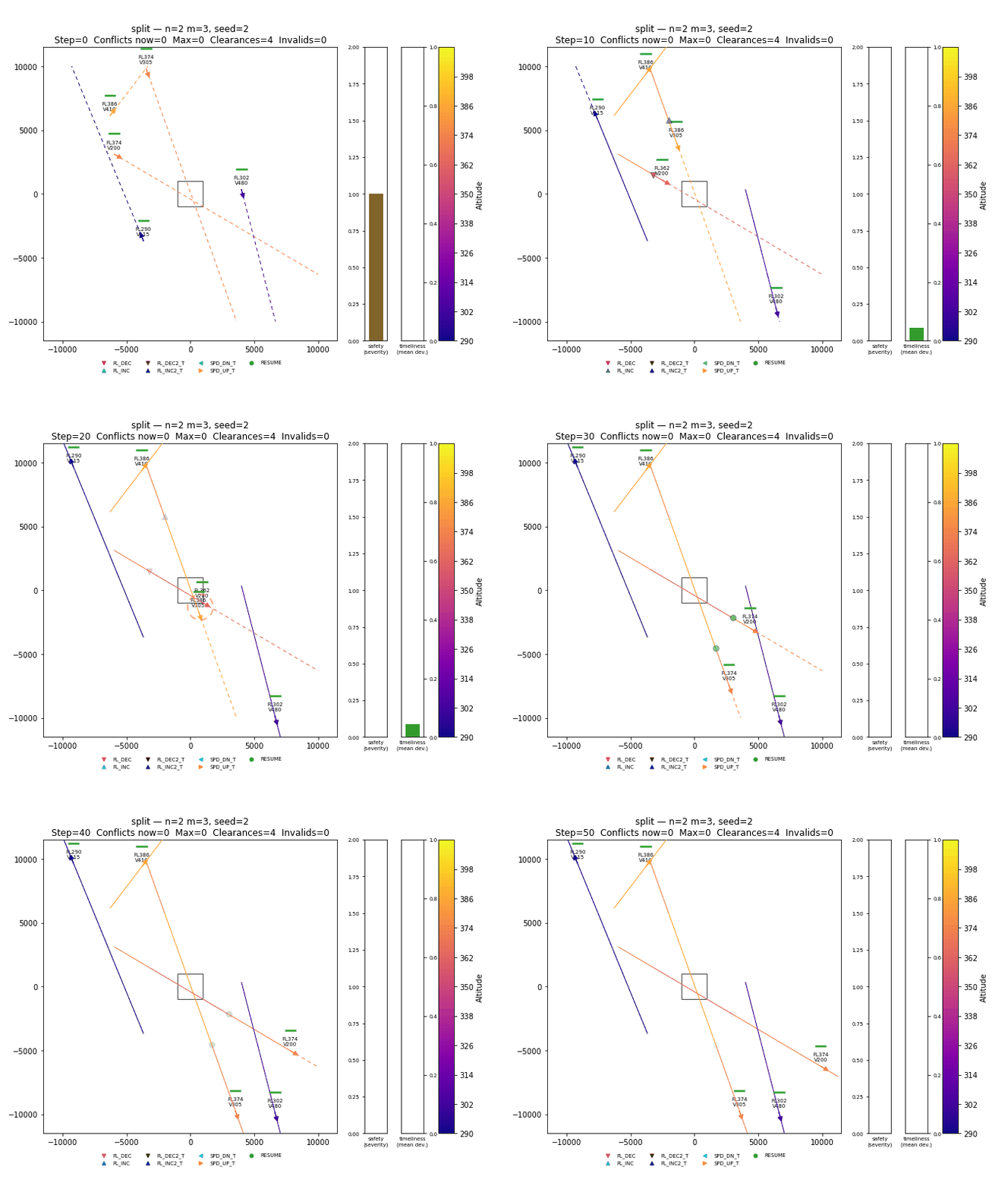
FL_INC on one, FL_DEC on the other, then a RESUME for each once the
pair is past. Two levels apart is ALT_MIN_SEP, so the conflict is
deleted, not merely reduced.
0 congestion events, 4 clearances, exit_miss 0.000. The cleanest
result on the board and the most expensive — this is what the
rule-based baseline does.
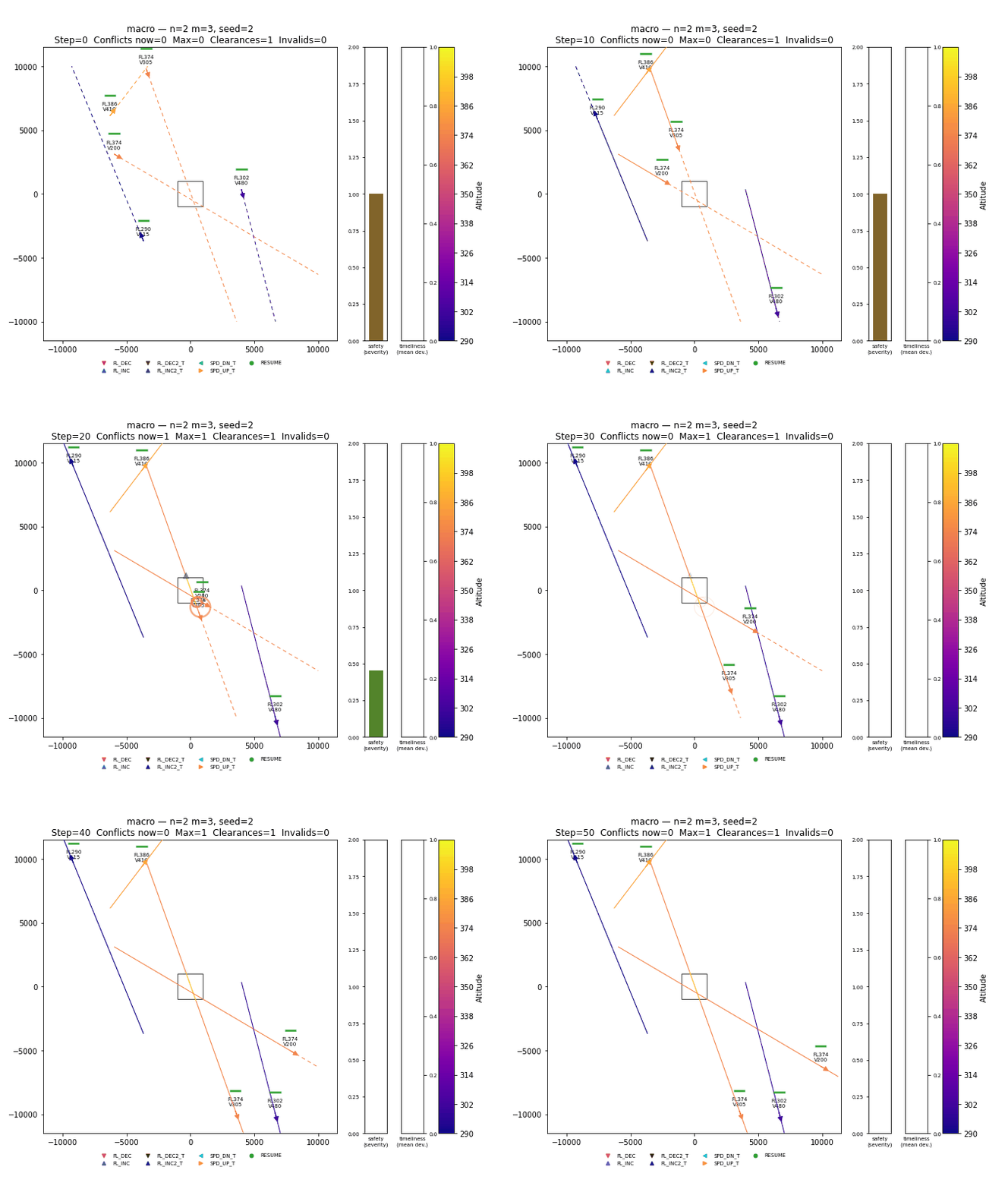
A single FL_INC2_T, issued at step 14. It buys two levels and books
its own return — watch the aircraft come home with no second clearance.
2 congestion events, 1 clearance, exit_miss 0.000. A quarter of the
price, and it does not fully clear the encounter. That gap is the whole
argument about when the macro is the right
tool.
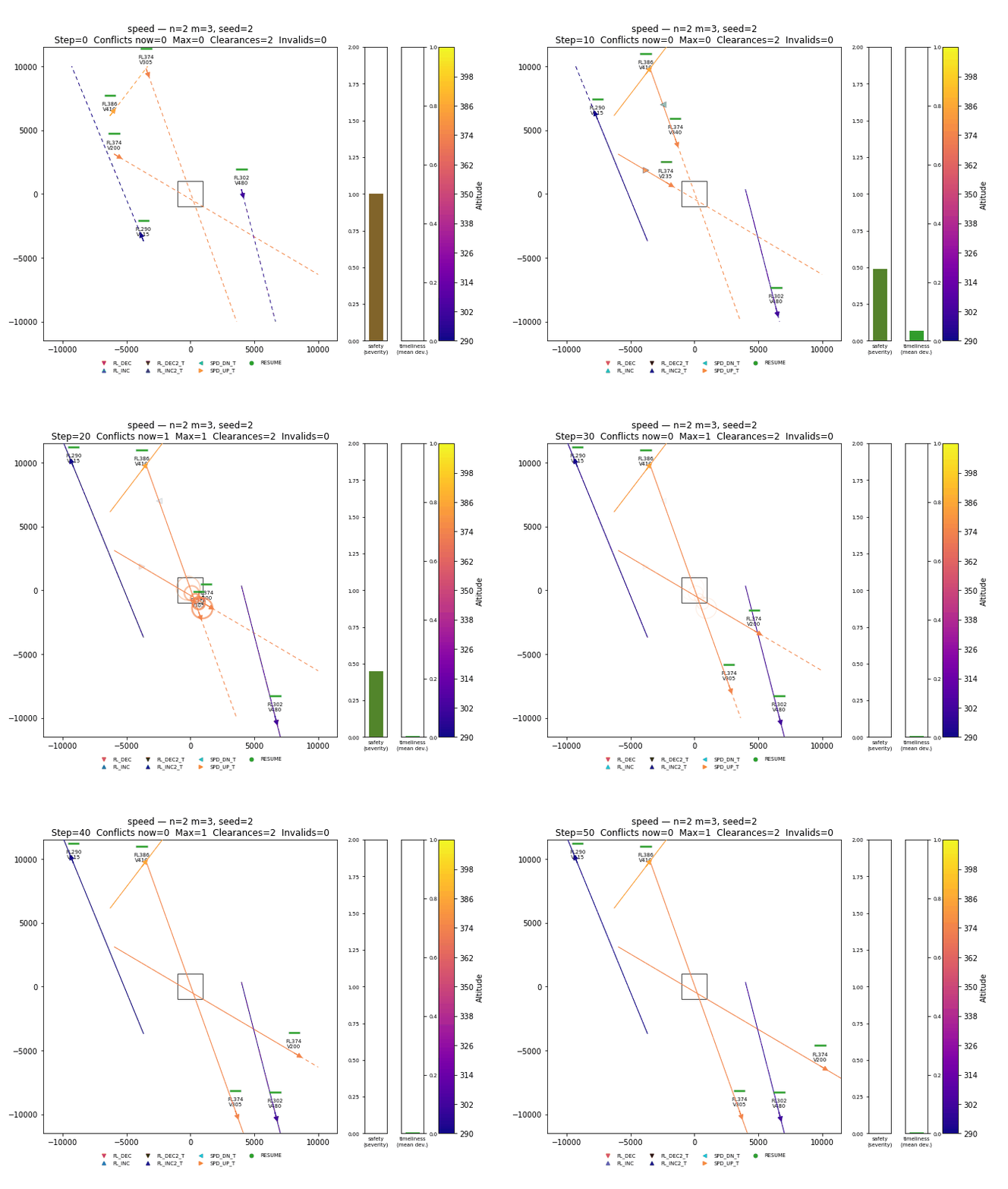
SPD_DN_T on one, SPD_UP_T on the other. Nobody changes level at all —
one simply arrives late and the other early, so they are never in the
hotspot together.
5 congestion events, 2 clearances, exit_miss 0.035. Note what you did
not have to do: each pulse is +dv for hold_steps, then −dv for
hold_steps, then nominal, all inside one clearance. The schedule comes
back by itself, which is what makes this the 4D-neutral resolution.
The action vocabulary, one clip at a time
The three resolutions above combine clearances. To see what each
instruction does on its own, drop the background traffic — --n-flights 2
--n-range 2 2 puts exactly two aircraft on screen — and issue one clearance to
aircraft 0 at the same step, 14, four steps before closest approach. Seed 2
draws the same converging pair as above (the converging aircraft are generated
before the background ones), so these are the encounter you have already
watched, with the bystanders removed.
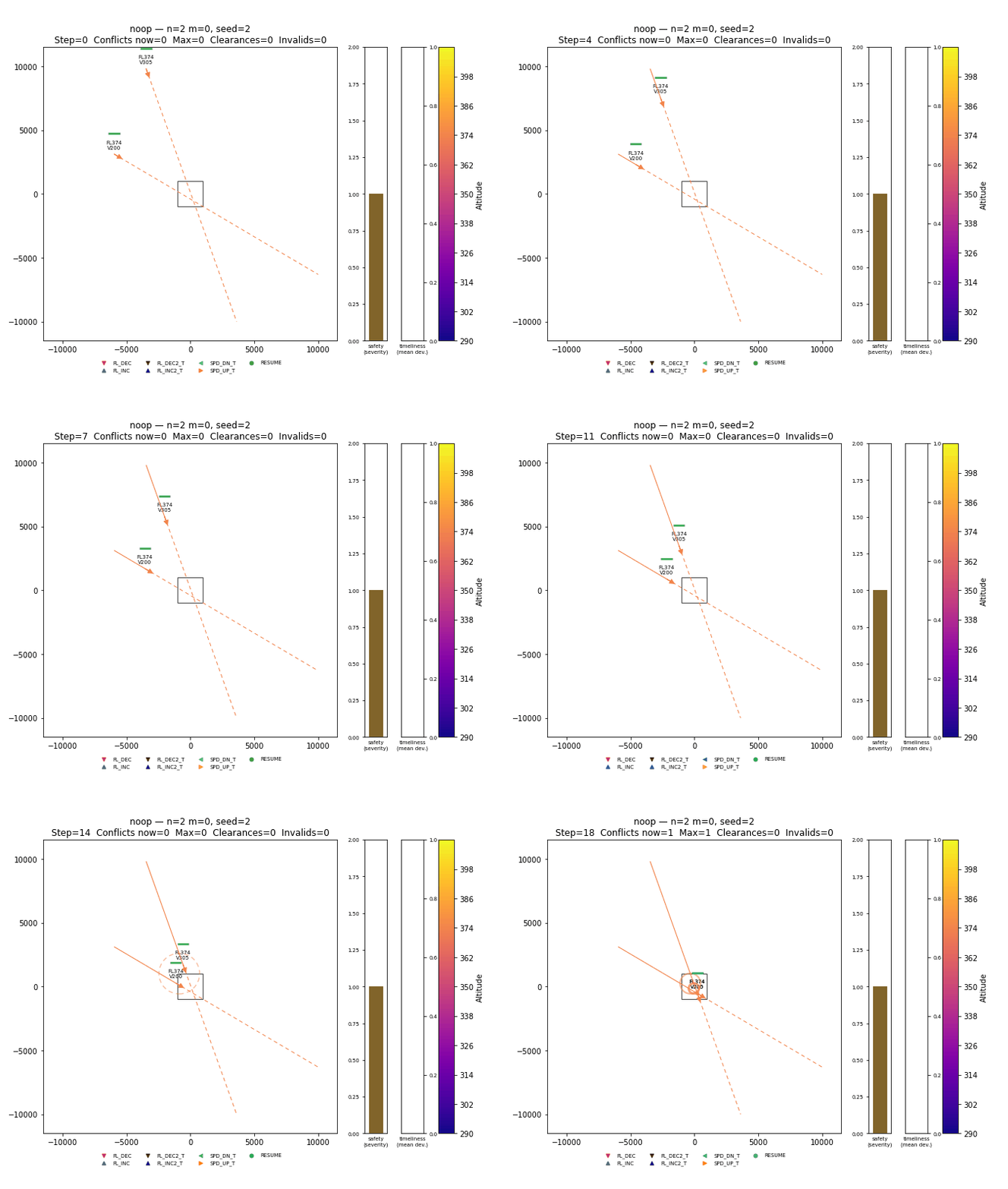
Mid-air at step 18, 3 conflict-steps, exit_miss 0.000. Perfectly timely,
and dead.
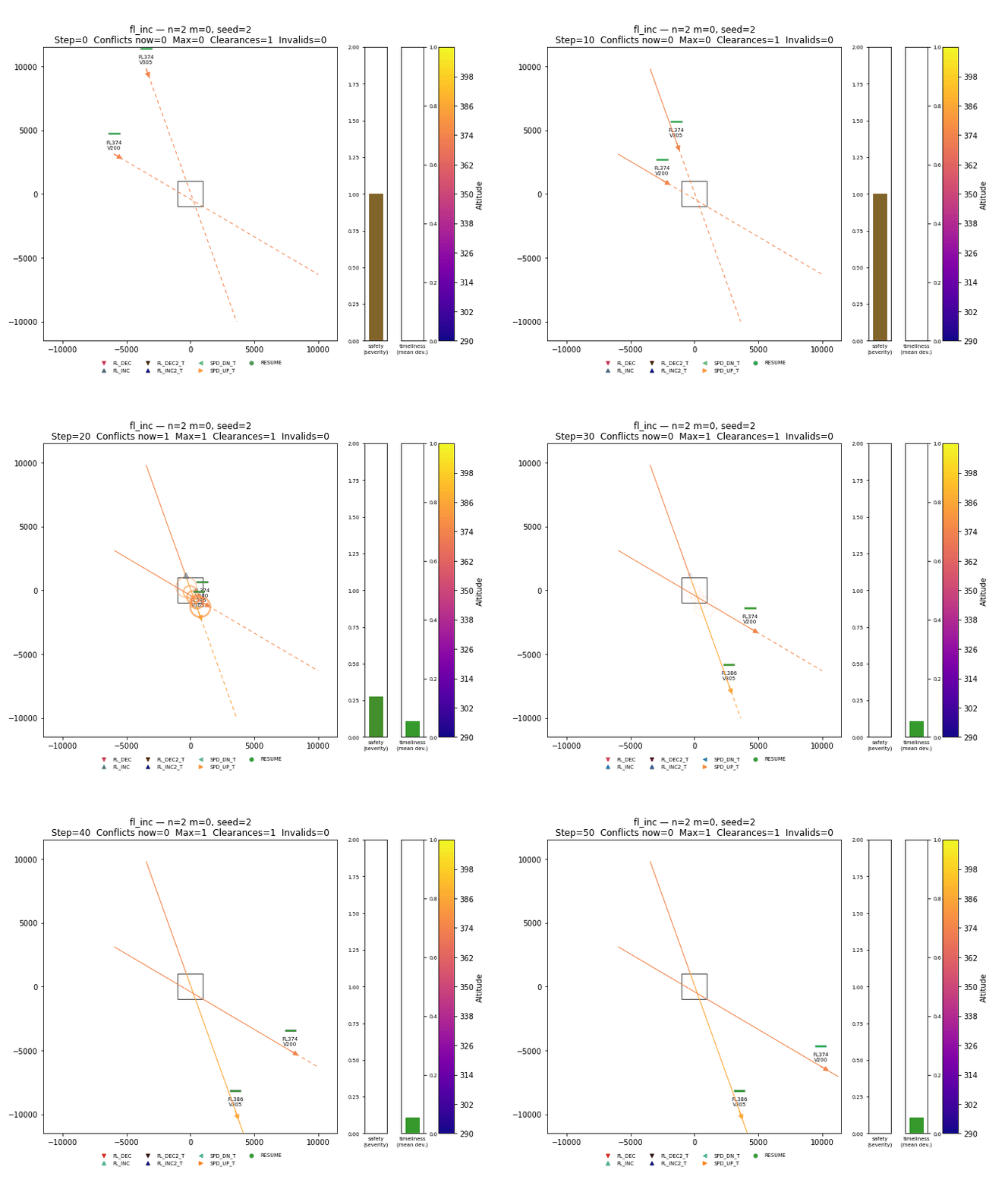
One level is not a fix. The pair still passes 7 m apart horizontally;
one level keeps it out of the mid-air rule (less than one level apart) and
inside the conflict rule (ALT_MIN_SEP is two). 5 conflict-steps, 1
clearance, exit_miss 0.500 — the aircraft never returns to plan, so
half the sector is a level off at the exit. FL_DEC is the mirror image.
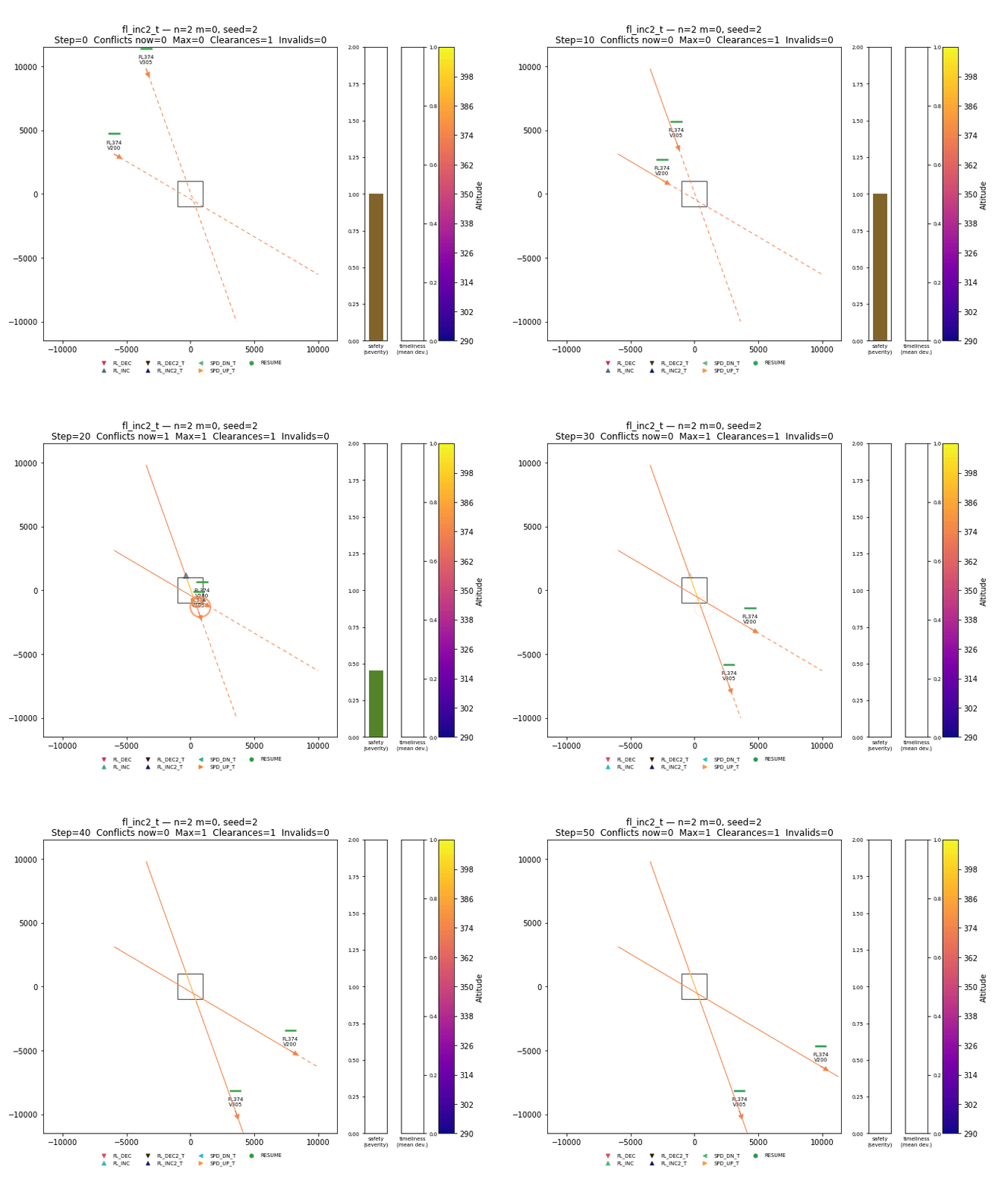
Two levels reach ALT_MIN_SEP, so the pair leaves the conflict list
rather than merely fading. 2 conflict-steps, 1 clearance, exit_miss
0.000 — watch hold_left count down and the aircraft descend by itself.
The return is booked with the order and charged once.
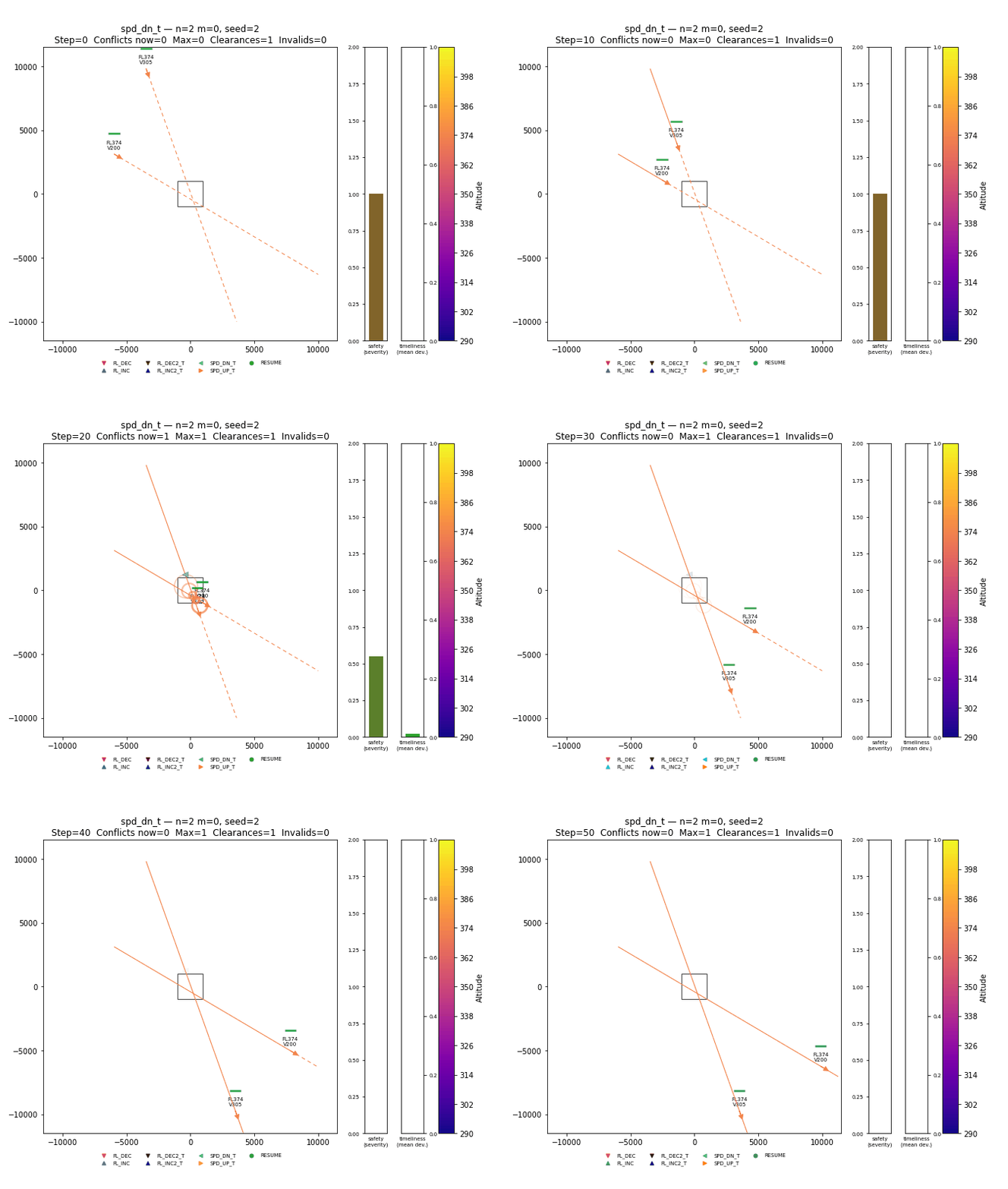
Four steps of −35 m/s move the crossing by 280 m — a wide miss in mid-air
terms and still squarely inside the 1000 m radius. 5 conflict-steps, 1
clearance, exit_miss 0.000: the pulse repays its own along-track debt,
so the 4D exit is untouched. Speed is the slow tool — 70 m per step.
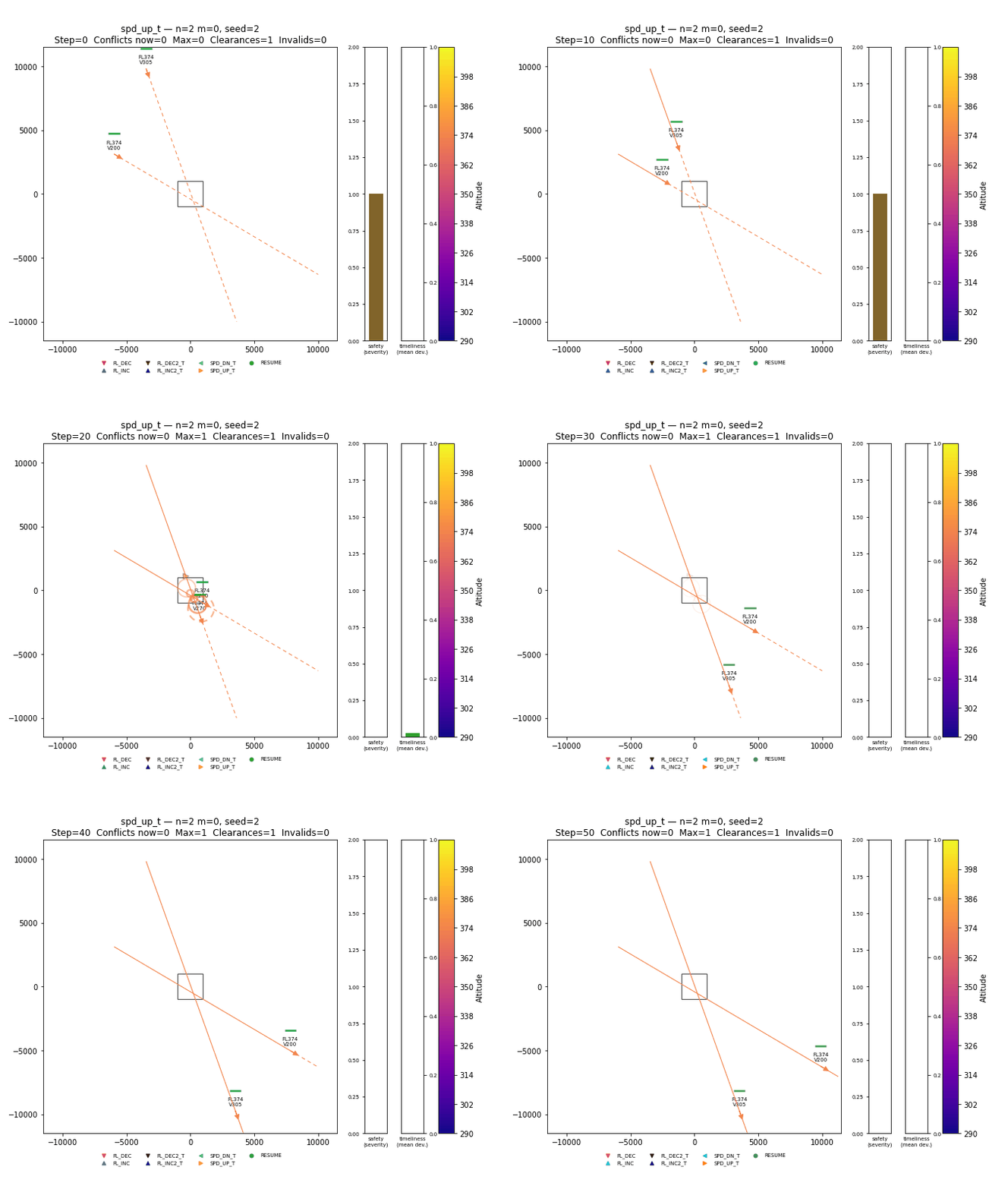
The mirror of SPD_DN_T. 4 conflict-steps, 1 clearance, exit_miss
0.000.
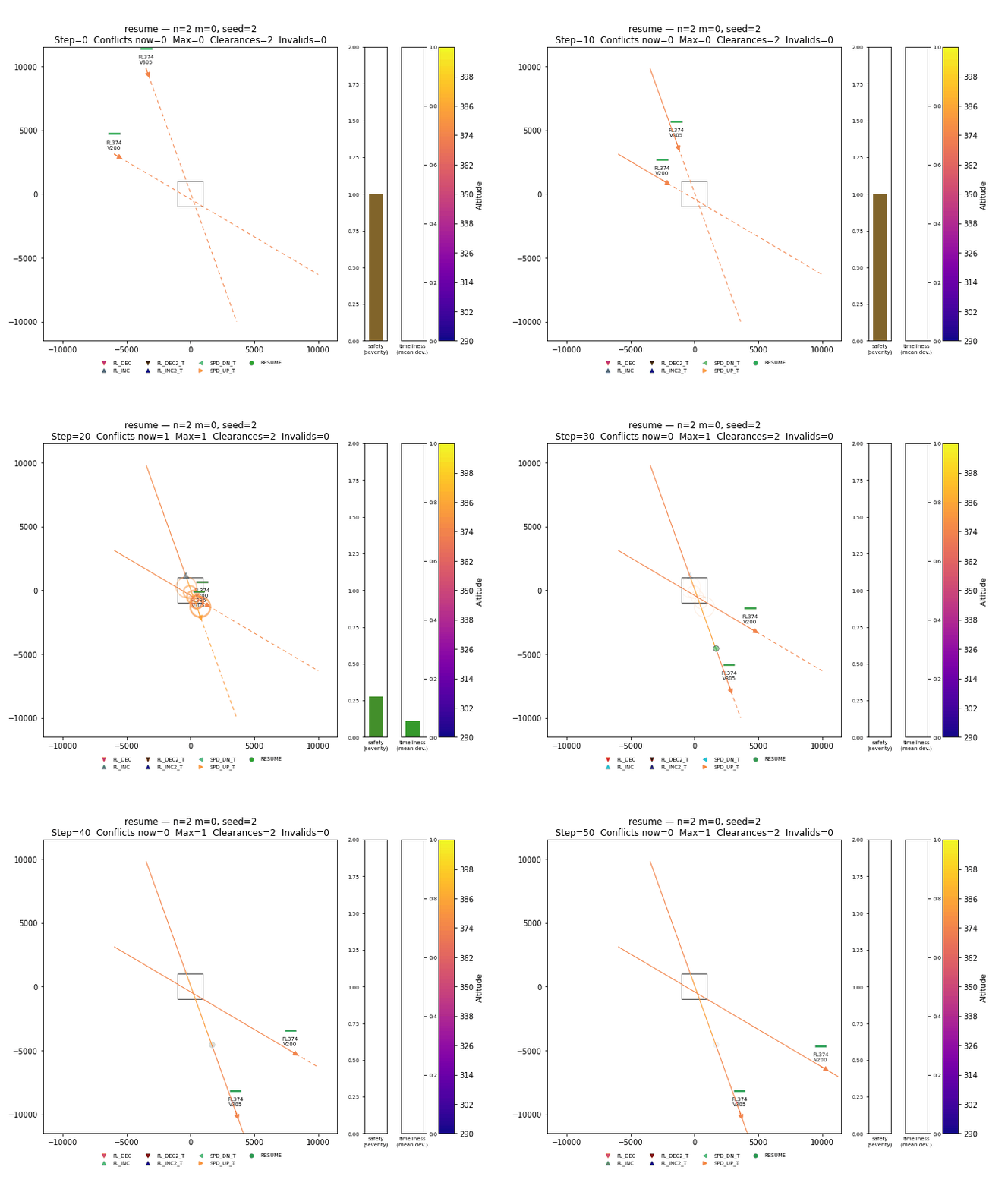
FL_INC at step 14, then RESUME at step 24 once the pair is past.
5 conflict-steps, 2 clearances, exit_miss 0.000 — the same safety as
the single level, and one more clearance buys the timeliness back. This is
the pattern the rule-based controller
uses.
| clip | ends | conflict-steps | clearances | exit_miss |
|---|---|---|---|---|
| do-nothing | mid-air, step 18 | 3 | 0 | 0.000 |
FL_INC / FL_DEC |
horizon | 5 | 1 | 0.500 |
FL_INC2_T / FL_DEC2_T |
horizon | 2 | 1 | 0.000 |
SPD_DN_T |
horizon | 5 | 1 | 0.000 |
SPD_UP_T |
horizon | 4 | 1 | 0.000 |
FL_INC + RESUME |
horizon | 5 | 2 | 0.000 |
Every column can be won by a different clip, which is why the
competition ranks them lexicographically rather than adding
them up. The numbers are pinned by tests/test_render_4d.py, so a change to
the environment that moves any of them fails a test before it silently dates
this table.
python scripts/render_4d.py --n-flights 2 --n-range 2 2 --seed 2 --ext gif --fps 4 \
    --agent noop --agent fl_inc --agent fl_dec --agent fl_inc2_t --agent fl_dec2_t \
    --agent spd_dn_t --agent spd_up_t --agent resume
The timing is an approximation, and that is the point
These scripts issue clearances at fixed steps chosen against this seed's geometry. They have to be approximate: the action set is discrete, only one aircraft may be commanded per step, and a temporary manoeuvre's return leg runs on a timer the caller does not control. Deciding when is part of the problem, not a detail to hide — and it is most of what separates a good agent from a bad one.
Reproduce or re-time any of them:
Exploring the simulator directly
You can drive the physics engine without the RL wrapper — useful for building intuition or a rule-based baseline.
import sys; sys.path.insert(0, ".")
from envs import CollisionCourseSimulator

sim = CollisionCourseSimulator(n=6, m=3)      # 6 collision-course, 3 random
colliding_ids, hotspots = sim.find_congestion(sim.flights)
print(f"{len(colliding_ids)} aircraft in detected congestion")

# Save a top-down animation of the whole airspace evolving
sim.animate(save_path="airspace.mp4")          # needs ffmpeg
That gives you the raw physics with no policy attached. For a full episode
under an actual agent — with the congestion rings, the exit-gate geometry and
the clearance markers Flight4DEnv's own reward is scored on — use
scripts/render_4d.py, described on the
evaluation page.
Next
- Training an agent — PPO, TensorBoard, configuration.
- Evaluation & rendering — KPIs, videos, recipes.
- Rule-based baseline — the litmus test the agent has to beat.
- API reference — exact spaces and reward maths.